Guides ·
Utility Locates in BC: What “Call Before You Dig” Actually Involves
Before any excavation in BC, buried utilities have to be located. Here's how the locate process works, how long it takes, what the paint and flags mean, and why hitting a line is the most expensive mistake on a job site.
Every excavation starts with a question that has nothing to do with dirt: what's already down there? Water mains, sewer, gas, hydro, telecom, fibre: buried infrastructure runs under roads, boulevards, yards, and lots that look completely empty from the surface.
Hitting one of those lines is the fastest way to turn a routine dig into an emergency. At best it's a delay and a repair bill. At worst it's a gas escape, an electrical contact, a neighbourhood without service, and a very serious conversation about who is liable. This is how the locate process works in British Columbia, and what it means for your project schedule.
How the locate process works
Submit a locate request before you dig. In BC, BC 1 Call is the free service that notifies participating utility owners of your planned work. You provide the location, the dates, and what you're doing, and the request goes out to the members whose infrastructure may be in the area.
Each utility responds for its own plant. Locates are not one report from one place: individual utility owners (or their locate contractors) mark their own lines, send prints, or confirm they have no facilities in the dig area. Some utilities are not BC 1 Call members, so on many sites you'll also need to contact the municipality, a private utility owner, or a property owner directly.
Allow real lead time. Locate turnaround varies by utility, area, and time of year, and spring and summer are the busy season for everyone. Requesting locates well ahead of mobilization is a scheduling decision, not a formality. Crews and equipment sitting idle waiting on a locate is an expensive way to learn that.
Locates expire. Markings fade, get paved over, or go stale as a project runs on. If your dig extends past the validity period, or the marks are no longer visible, the request has to be refreshed before excavating.
What the colours mean
Locate markings follow a standard colour code, and knowing it on site is basic literacy for anyone near an excavator:
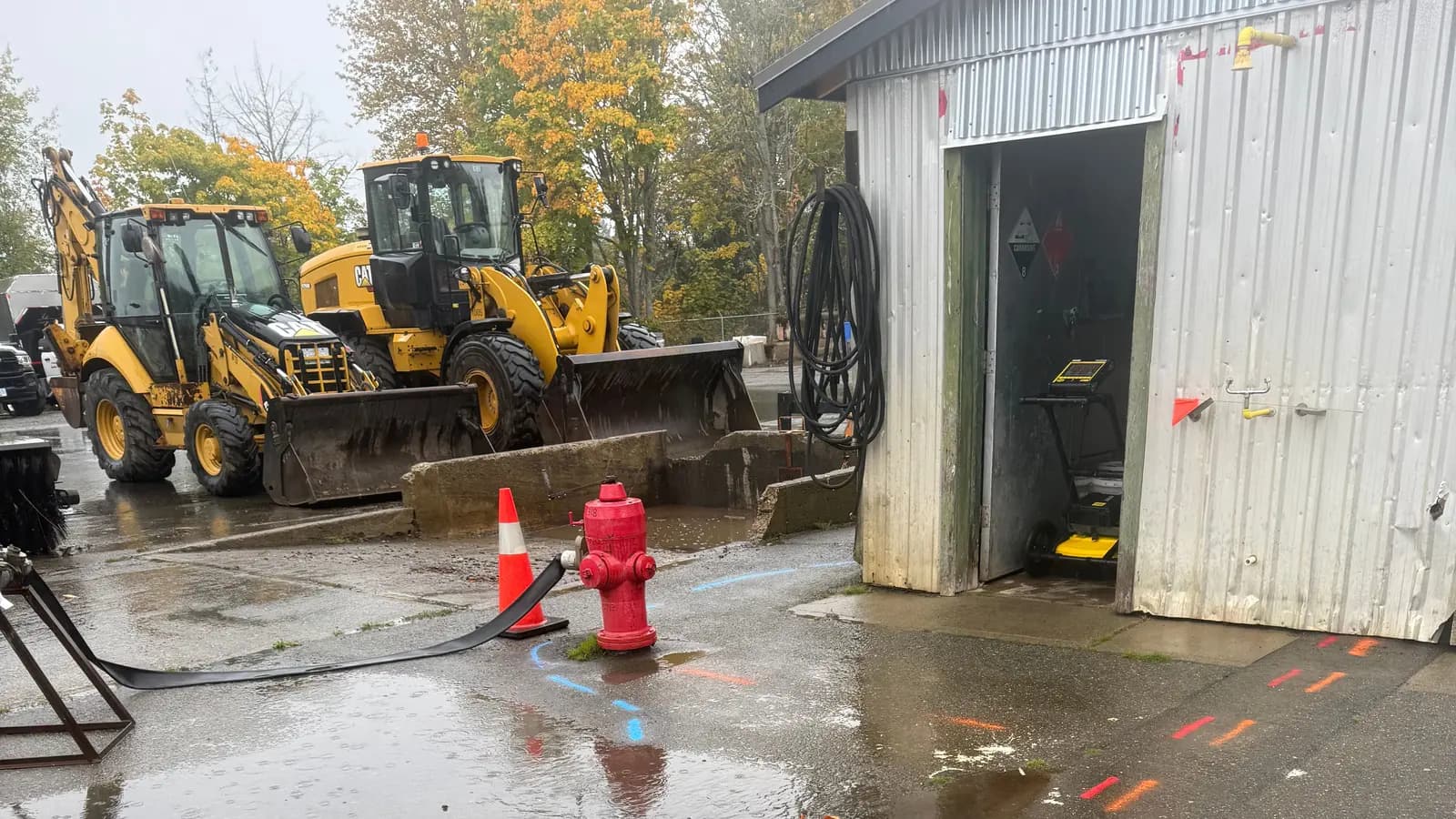
Red: electrical power lines, cables, and conduit. Yellow: gas, oil, steam, and petroleum products. Orange: communications, telephone, fibre, and alarm lines. Blue: potable water. Green: sewer and storm drain. Purple: reclaimed water and irrigation. White: the proposed excavation area itself. Pink: temporary survey markings.
Marks show approximate horizontal location, not depth. Buried infrastructure is rarely exactly where or how deep anyone assumes. Depth changes with regrading, resurfacing, and decades of subsequent work.
The part that actually prevents damage: how you dig
Having locates is not the same as being safe. What prevents strikes is the digging method near marked plant.
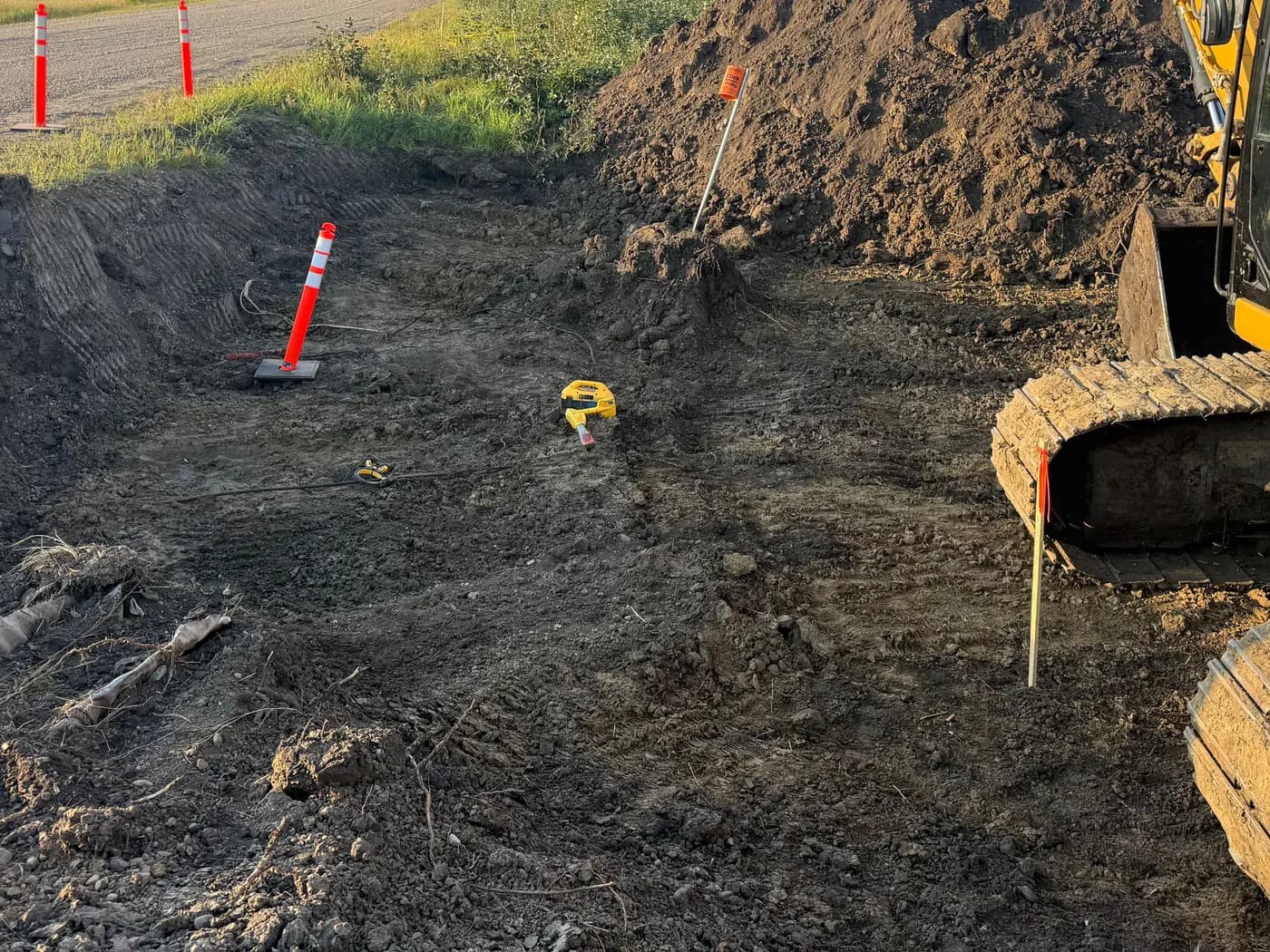
Expose before you excavate. Near a marked line, the standard is to expose it by hand digging or hydro-excavation before bringing in machine buckets. Hydrovac is the cheapest insurance in construction. A vac truck for an afternoon costs a fraction of one gas strike.
Respect the tolerance zone. Utility owners specify a zone either side of the marked line where mechanical excavation isn't permitted without exposing the plant first. Know it before the machine starts.
Protect and support what you expose. Once a line is uncovered, it needs to be supported and protected through backfill. Damage caused by unsupported pipe or careless backfill shows up later, which is worse.
Brief the crew and keep the paperwork on site. The operator in the seat is the last line of defence. Locate prints, tickets, and marked-up plans belong on the job, not in the truck back at the yard. And if something doesn't match (a line where nothing was marked, or marks that make no sense), stop and confirm. Unexpected plant is a reason to pause, not to guess.
Why this matters when you hire an excavation contractor
Ask any contractor bidding your work how they handle locates. The answer tells you a lot. A professional will describe requesting locates early, allowing lead time in the schedule, hydro-excavating to expose plant, and keeping documentation on site. A gambler will tell you they've never hit anything.
Illaheechuck Civil Construction handles utility locating and daylighting as part of how we run excavation work across BC and Yukon, with in-house line locating capability and hydro-excavation support, so live services get exposed and protected rather than discovered the hard way.
Planning an excavation or servicing project? Send us the details through the chat on our home page or the contact form, and our estimating team will get back to you within one business day.