Industrial & Utility ·
Substation Excavation and Construction on Vancouver Island
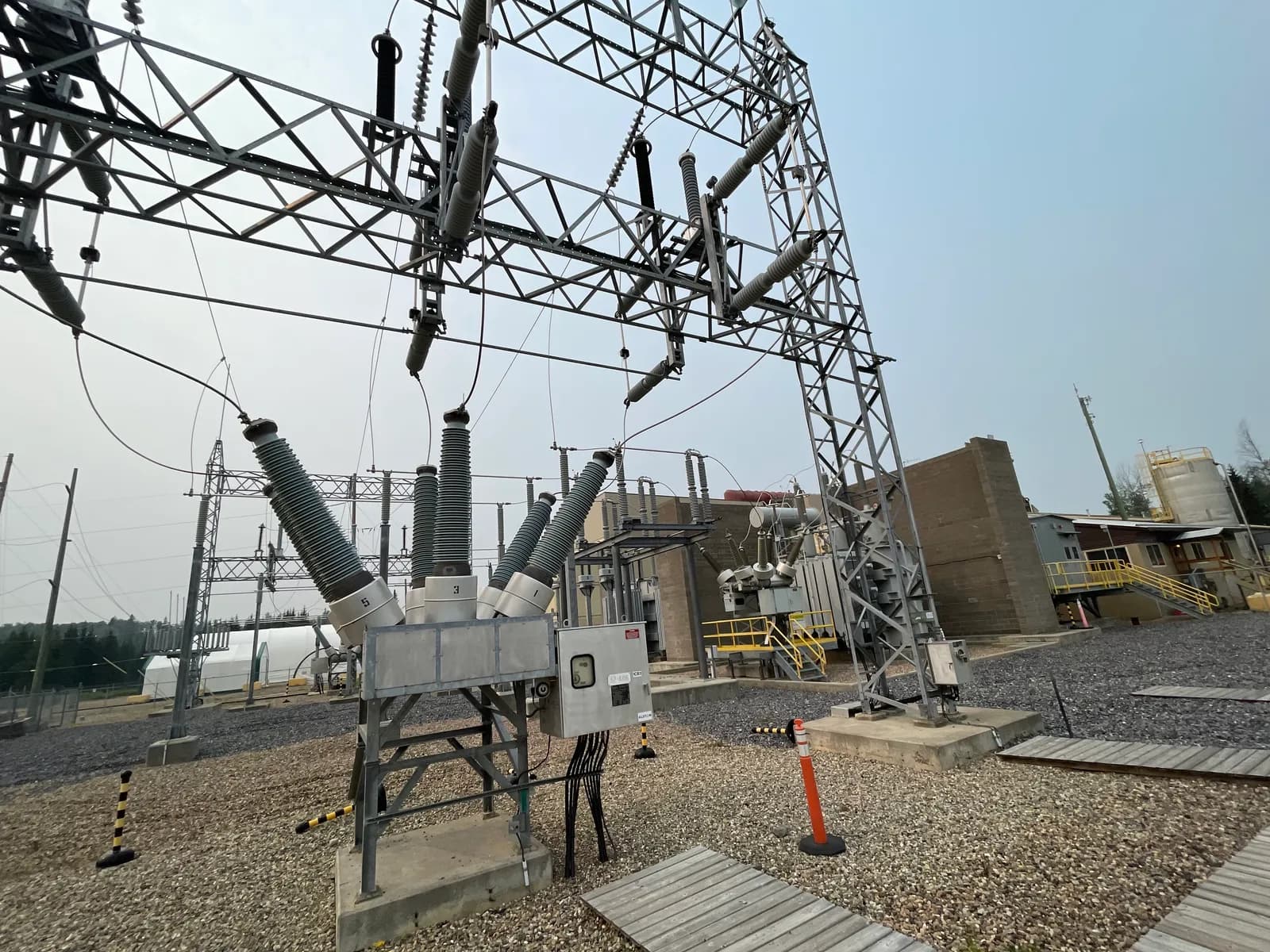
Substation and industrial civil construction on Vancouver Island: yard earthworks, detailed footing excavation, transformer pads, grounding grids, duct banks, crushed-rock surfacing, and access roads, self-performed by Illaheechuck with survey-verified layout and as-builts.
A substation is only as good as what it sits on. Every breaker, transformer, bus structure, and control building in a yard stands on a concrete footing that had to be excavated to exact elevation, on ground that had to be proven, with a grounding grid trenched beneath it and crushed rock placed over it. That civil work is invisible once the equipment is energized, and it has to be right the first time, because nobody re-excavates under a live 138 kV bus.
Illaheechuck Civil Construction builds that scope on Vancouver Island: the excavation and the construction, from the first site strip to the finished, surfaced yard. We're a First Nations owned heavy civil contractor based in Campbell River, and substation and industrial civil work is work we have done and do well: self-performed with our own crews, with layout and grade control handled in-house to the tolerances utility and industrial owners require.
Substation excavation and construction scope we deliver
Yard preparation and engineered pads. Site strip, subgrade preparation, structural fill placed in lifts and compacted to specification, and the graded, drained yard that everything else is built on, with density testing coordinated and documented.
Detailed footing and foundation excavation. Excavation for equipment footings, bus and structure foundations, breaker and disconnect stands, and pier footings, dug to design elevation and dimension, with bearing surfaces prepared for inspection and sign-off before concrete.
Transformer pads and oil containment. Excavation for transformer foundations and the secondary containment structures around them, including the deeper and more sensitive work those pads demand.
Control building and auxiliary foundations. Foundation excavation and backfill for control buildings, relay houses, and auxiliary equipment.
Grounding grid and cable trenching. Trenching for the grounding grid and cable runs across the yard, to the depths and spacing on the grounding design, with backfill placed to protect conductor.
Duct banks and conduit. Excavation, bedding, and backfill for underground duct banks and conduit runs into the yard and between structures.
Crushed-rock surfacing and drainage. The crushed-rock yard surface placed to depth and grade, with yard drainage and perimeter ditching that keeps water out of the footings and out of the containment.
Access, fencing, and perimeter work. Access road construction, fence line preparation, and the site works around the yard.
Why substation civil work is different, and why we're built for it
Tolerance. An equipment footing isn't a hole in the ground; it's a precise elevation and footprint that an anchor bolt template has to land on. Our layout and grade control are in-house, so footings are set out from the design model, checked as they're dug, and verified before concrete, not eyeballed from a string line.
Inspection and documentation. Utility and industrial owners require a record: bearing surface inspections, compaction results, elevation checks, and survey-verified as-builts of footings, trenches, and duct banks. We build that record as we go, because a substation without as-builts is a maintenance problem for the next thirty years.
Working around energized and existing infrastructure. Substation work is often an expansion or upgrade inside or beside a live yard. Our crews work to utility safety rules, limits of approach, and lockout and permitting processes, with the supervision and discipline that energized environments demand.
Underground awareness. Existing grounding grids, cables, and conduit are everywhere in an established yard. We locate, expose by hand or hydrovac, and protect existing plant before any machine excavation near it.
Precision plus production. The same company that excavates a footing to tolerance also moves the bulk earthworks, builds the pad, places the crushed rock, and constructs the access road: one contractor, one accountable crew, from the first strip to the finished yard.
Who we do this work for
Electrical utilities and the EPC and general contractors delivering their substation, switchyard, and transmission projects, including work for utility owners such as BC Hydro, where civil scopes are typically delivered through prequalified contractors and their subcontractors. Independent power producers and renewable energy developers building interconnection and collector substations. Industrial operators on Vancouver Island (mills, ports and marine terminals, water and wastewater plants, processing facilities) with equipment foundations, pads, and plant civil works. And First Nations and their development corporations delivering energy and industrial projects on their own territories.
We work as a direct contractor to industrial owners, as a subcontractor to the EPC and general contractors delivering utility projects, or as a joint-venture partner where that structure fits. For proponents and primes carrying Indigenous participation commitments on utility and industrial work, we are a First Nations owned partner that self-performs real scope.
Talk to us about your substation or industrial civil scope
Planning a substation, a switchyard expansion, an interconnection, or an industrial site on Vancouver Island? Send us the civil and foundation drawings, the geotechnical report, and the grounding design through the chat on our home page or the contact form. Our estimating team will respond within one business day, often sooner.